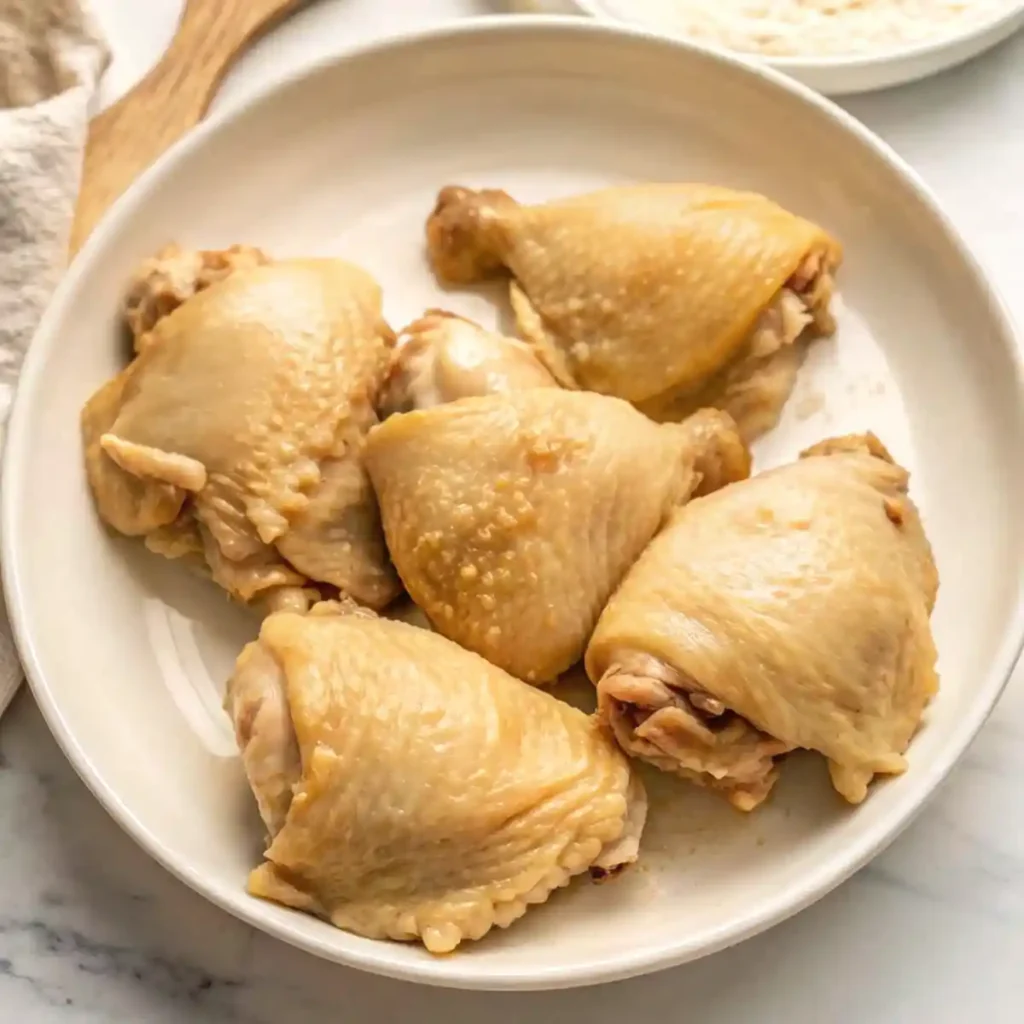
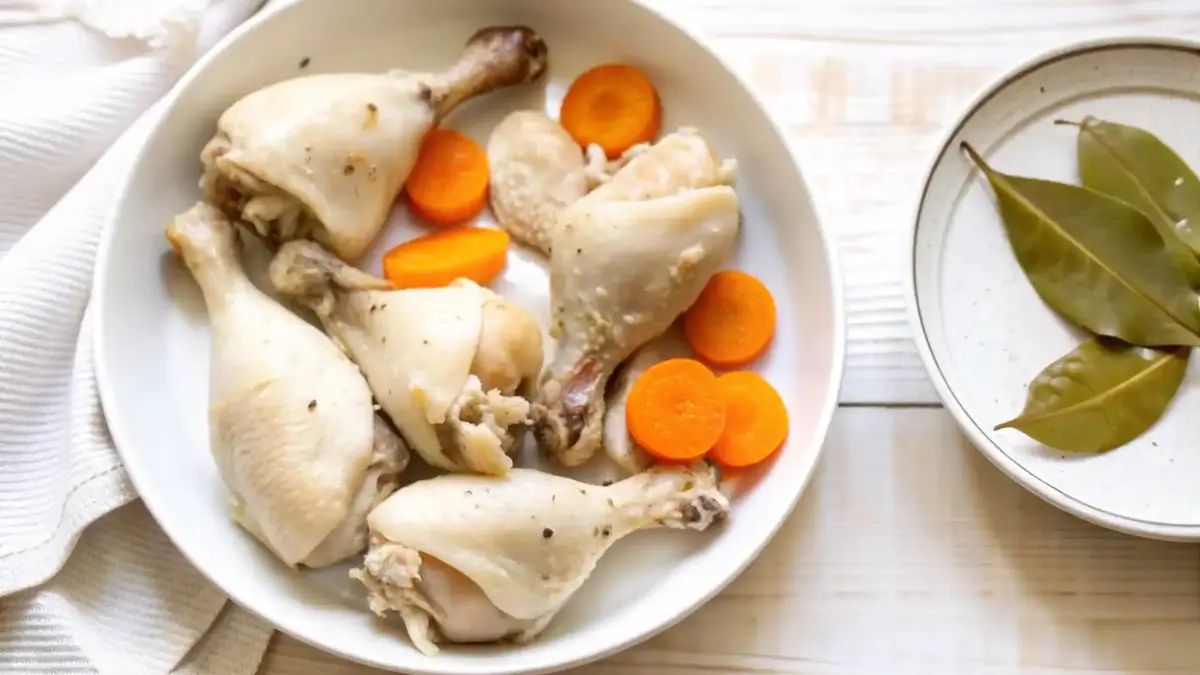
There’s a quiet comfort in the kitchen that only simmering chicken can bring. I remember standing on a wooden step-stool beside my grandmother as a child, peering into her deep enamel pot, watching boiled chicken thighs bob gently in golden broth. “Low and slow,” she’d say, “that’s how you get meat that falls apart with love.”
ANNONCE
Back then, I didn’t understand food science but I knew that boiled chicken thighs, even without a single fancy spice, always tasted like home. Today, I’ve refined her method with timing precision and health-conscious choices, but the soul of the dish remains unchanged. Whether you’re prepping meal-prep protein or soothing a sore throat with broth, knowing exactly how long to boil chicken thighs makes all the difference.
Why Will You Like This Recipe?
This boiled chicken thighs recipe is quick, foolproof, and endlessly adaptable. It delivers tender, juicy meat every time perfect for salads, soups, or solo meals. Plus, it’s low in calories, high in protein, and ideal for clean-eating or weight-conscious diets.
Cook Time: 10–26 minutes (depending on type and state of chicken)
Total Time: 15–31 minutes
Servings: 4
Calories: Approximately 220 calories per serving (for boiled boneless chicken thighs, skinless)
Ingredients need of Boiled Chicken Thighs Recipe
6 boneless or bone-in chicken thighs (skin-on or skinless—your choice; fresh or individually frozen)
2 teaspoons salt (adjust based on stock saltiness if using broth)
4 cups water or low-sodium chicken stock (stock adds depth; water works in a pinch)
2 lemon wedges (optional, for brightness)
1 teaspoon garlic powder (preferred over raw garlic for flavor infusion)
1 teaspoon onion powder
Notes:
For gluten-free or dairy-free diets, this recipe is naturally compliant.
Prefer baked chicken thighs later? Boil first for tender meat, then finish in the oven for crisp skin!
Preparation Method of Boiled Chicken Thighs Recipe
Step One: Arrange and Cover
Place chicken thighs in a single layer in a wide saucepan or Dutch oven. Add enough liquid (water or stock) to cover the meat by 2 inches. Sprinkle with salt, garlic powder, onion powder, and lemon wedges if using.
Boiled chicken thighs calories are modest especially when skinless with roughly 220 kcal per 4-oz serving, packed with 26g of high-quality protein. This protein promotes satiety, helping curb cravings and reduce overall calorie intake. Unlike fried or heavily sauced versions, boiling uses no added fat, making it ideal for calorie-controlled diets.
Top Benefits of Boiled Chicken Thighs
Rich in nutrients: High in iron, zinc, and B vitamins essential for energy and immunity.
Gentle on digestion: Perfect for recovery meals or sensitive stomachs.
Budget-friendly: Thighs cost less than breasts but offer more flavor and moisture.
Versatile base: Use in everything from baked chicken thighs dishes to healthy wraps.
Storage and Reheating
Refrigerator: Store boiled chicken thighs in an airtight container up to 4 days.
Freezer: Freeze for up to 3 months portion in broth to retain moisture.
Reheating:
Stovetop: Simmer in a bit of broth or water over low heat 5–7 minutes.
Microwave: Cover with damp paper towel; heat in 30-second intervals.
Oven: For crisp skin, place on a baking sheet at 375°F (190°C) for 10 minutes.
Tips and Additional Ideas
Enhance flavor without salt: Add fresh thyme, rosemary sprigs, or a splash of apple cider vinegar.
Save the broth: Strain and freeze for soups or risotto it’s liquid gold!
Boiled chicken thighs are a classic comfort dish that delivers tender, juicy meat every time. Whether for meal prep, soup, or simple clean eating, this foolproof recipe ensures perfect results with minimal effort and maximum flavor.
6chicken thighsboneless or bone-in, skin-on or skinless
2tspsaltadjust to taste or based on broth saltiness
4cupswater or low-sodium chicken stockstock adds depth of flavor
2lemon wedgesoptional, for brightness
1tspgarlic powderfor gentle flavor infusion
1tsponion powder
Instructions
Place chicken thighs in a single layer in a wide saucepan or Dutch oven. Add enough water or stock to cover the meat by 2 inches. Sprinkle with salt, garlic powder, onion powder, and lemon wedges if using.
Bring the liquid to a gentle boil over high heat, then immediately reduce to a low simmer. Cover with a lid to maintain temperature.
Simmer until chicken reaches an internal temperature of 165°F (74°C). Use these times as a guide: Boneless fresh: 10–12 min Bone-in fresh: 15–18 min Boneless frozen: 12–14 min Bone-in frozen: 22–26 min.
Remove chicken with tongs and rest for 5 minutes before shredding or serving. For crispy skin, sear briefly in a skillet or bake at 375°F (190°C) for 10 minutes.
Notes
This recipe is naturally gluten- and dairy-free. For added depth, replace half the water with bone broth or add a bay leaf. Use leftovers for salads, tacos, or grain bowls.
Keyword Boiled Chicken, Healthy, High-Protein, Weight Loss
Frequently Asked Questions (FAQs):
How long does it take for chicken thighs to boil?
Fresh boneless thighs take 10–12 minutes; bone-in require 15–18 minutes in a gentle simmer. Frozen pieces take longer up to 26 minutes for bone-in.
Are boiled chicken thighs healthy?
Yes! They’re high in protein, low in carbs, and contain essential nutrients. Boiled chicken thighs calories are reasonable, especially without skin.
Should I boil chicken thighs covered or uncovered?
Cover the pot after bringing to a simmer. This maintains temperature, reduces evaporation, and ensures even cooking.
What are common mistakes when boiling chicken?
Boiling too vigorously → tough meat Overcrowding the pot → uneven cooking Not checking internal temp → under- or overcooking Skipping the rest → juices leak out when cut
This recipe and its associated nutritional information are provided for general informational purposes only. It is not intended as medical advice, diagnosis, or treatment. Always seek the guidance of a qualified healthcare provider with any questions regarding a medical condition or dietary needs. This recipe does not replace a medical prescription. Individual nutritional requirements vary; consult a registered dietitian or physician before making significant changes to your diet.