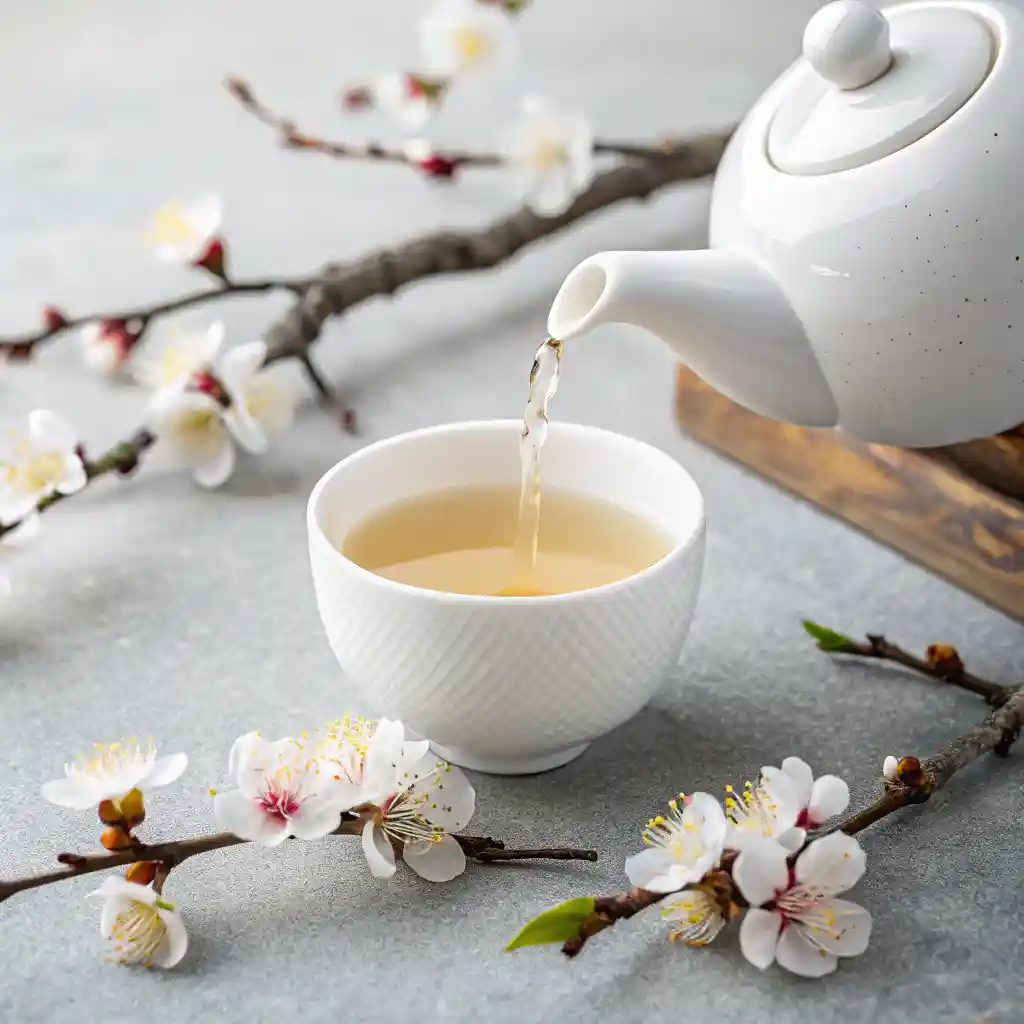
I first fell in love with white tea while visiting a close friend in New York. We stumbled into a cozy tea shop tucked between bookstores and bakeries. While I usually opted for green tea, the shopkeeper recommended their rare Silver Needle white tea. The first sip was unforgettable light, slightly sweet, and soothing, almost like sipping morning dew from flower petals. That experience inspired me to learn more about white tea, its history, and how to prepare it at home.
ANNONCE
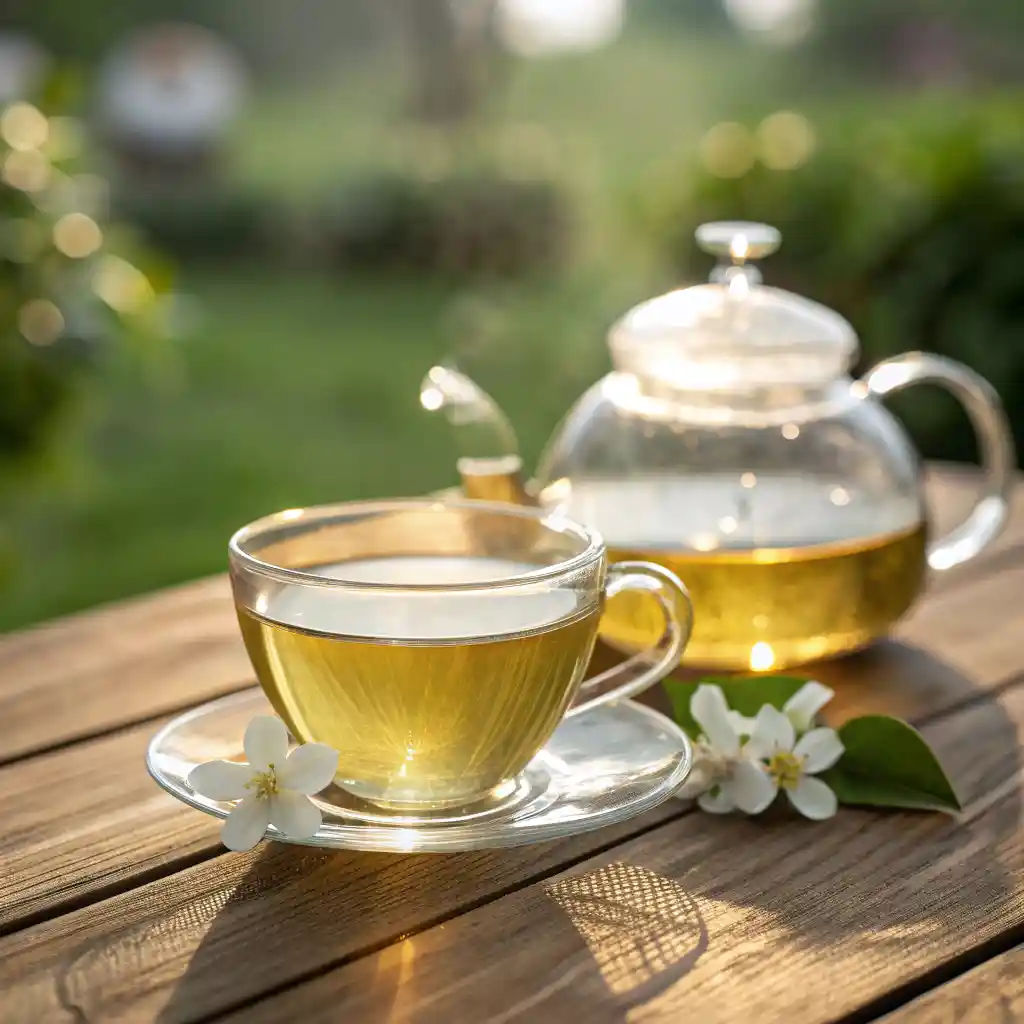
Today, brewing white tea has become a ritual of calm in my daily routine. Whether enjoyed hot on a quiet morning or iced on a summer afternoon, it reminds me to slow down and savor life’s simple pleasures.
This soothing white tea recipe is light, slightly sweet, and antioxidant-rich. Perfect hot or iced, it’s a gentle ritual to slow down and savor life’s simple pleasures.
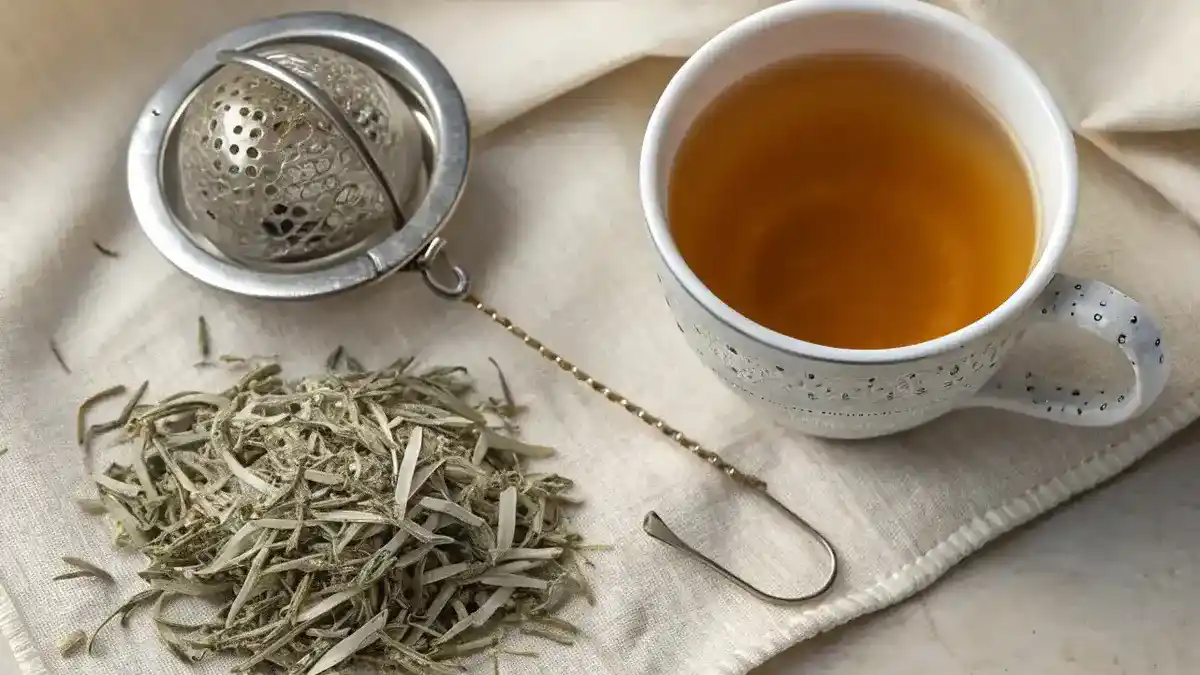
2tsploose-leaf white teaSilver Needle for floral taste, White Peony for bolder flavor
2cupsfiltered waterspring water is best
1tsphoney or agaveoptional, enhances natural sweetness
1slicelemonoptional, adds brightness
Instructions
Heat the filtered water to about 175–185°F (80–85°C). Avoid boiling.
Place loose-leaf tea (or tea bags) in a cup or teapot. Pour hot water over them and steep for 3–5 minutes depending on desired strength.
Strain the tea, add honey or lemon if desired, and sip slowly. White tea leaves can be steeped up to 3 times.
Notes
Try variations: brew double strength and pour over ice for iced tea, add floral herbs like chamomile or lavender, or infuse with citrus zest for extra brightness.
Keyword Healthy Drink, Low Caffeine, White Tea
Why Will You Like This Recipe?
This white tea recipeis perfect for tea lovers seeking a refreshing, antioxidant-rich drink with a soft, natural sweetness. It’s gentle on the stomach, lower in caffeine than black tea, and pairs beautifully with light meals or desserts. Unlike heavily processed teas, white tea keeps its authentic, delicate character intact.
Place the loose leaves or Tea Bags into a cup or teapot. Pour hot water over them. Steep for 3 to 5 minutes depending on desired strength.
Step Three: Serve and Enjoy
Strain the tea, add honey or lemon if desired, and sip slowly.
Pro Tip: White tea can be steeped up to 3 times, with each infusion revealing new flavor notes.
Variations and Customization
Iced Tea: Brew double strength, chill it, and pour over ice for a refreshing drink.
White Tea Shot: Brew a small, strong infusion for a concentrated dose of antioxidants perfect as a morning boost.
Floral Twist: Add chamomile, lavender, or rose petals. (Is chamomile a white tea? No, it’s an herbal infusion, but it complements white tea beautifully.)
Citrus Infusion: Add orange or lime zest for a tangy finish.
Discover free daily recipes and kitchen inspiration follow us on Pinterest.
White Tea vs Green Tea: Key Differences
When comparing white tea vs green tea, the biggest difference lies in processing:
White Tea: Minimally processed, air-dried, and nearly non-oxidized. Flavor is delicate, floral, and slightly sweet.
Green Tea: Quickly pan-fired or steamed to stop oxidation, leading to a grassy, vegetal flavor.
Nutritionally, both are rich in antioxidants, but tea may contain slightly fewer tannins, making it smoother and less astringent than green tea.
What Role Does Oxidation Play in Tea?
All true teas whether white, green, oolong, black, or pu-erh—originate from the same plant: Camellia sinensis, an evergreen shrub native to China and India. Over the centuries, countless cultivars and hybrids have been developed, each adapting to different climates and regions. What truly determines the character of your tea, however, is not just the plant variety but also how the leaves are processed.
A key factor in this process is oxidation—the natural reaction that occurs when freshly harvested leaves are exposed to oxygen. The longer the leaves oxidize, the darker they become and the richer, more complex the flavor profile grows. To manage this transformation, tea artisans use a range of techniques.
Rolling, crushing, or shaping the leaves encourages oxidation, while steaming, roasting, or firing halts it. Ultimately, the level of oxidation is what gives each tea its distinct color, aroma, and taste.
A Brief History
White tea has its origins in imperial China, particularly in Fujian province. During the Song Dynasty (960–1279), rare teas made from young buds were offered as imperial tributes. Poets described them as “white like clouds, pure like snow.”
The modern loose-leaf version we enjoy today was developed in the 1700s using varieties like Da Bai and Da Hao. At first, it was extremely rare and hard to transport, but as cultivation spread, it became more accessible worldwide.
Today, varieties such as Silver Needle (Bai Hao Yin Zhen) and White Peony (Bai Mudan) remain highly prized, while new types like Darjeeling Tea showcase global adaptations.
Caffeine Content in White Tea
White tea is often considered one of the milder teas when it comes to caffeine, especially compared to green or black varieties. Traditional white teas from Fujian, China, are naturally lower in caffeine, but this isn’t always the case.
As white tea cultivation has spread to other regions, the caffeine levels can vary significantly. In fact, some modern tea may contain caffeine levels equal to—or even higher than certain green or black teas, depending on how the leaves were grown and processed.
It’s also important to remember that caffeine content in your cup isn’t determined by the tea alone. Factors such as cultivation methods, leaf variety, and even your brewing style like steeping time and water temperature can influence how much caffeine ends up in your drink.
If you’re sensitive to caffeine or carefully monitoring your intake, it’s best to check with your tea vendor for details about the specific batch you’re buying.
Why White Tea May Support Weight Loss
White tea contains catechins, compounds that may support fat metabolism. Some studies suggest it can help inhibit fat cell formation and promote fat breakdown. While it’s not a weight-loss “magic drink,” including tea in a balanced diet may gently support healthy weight management.
Top Benefits
High in antioxidants that may protect cells from oxidative stress
Supports skin health by reducing free radical damage
Provides a calm lift in energy without the crash or jitters.
May improve oral health due to natural fluoride and tannins
Encourages hydration with a mild, soothing taste
Storage and Reheating Tea
Storage: Keep in airtight, opaque containers. Avoid sunlight, heat, and strong odors. Properly stored, white tea remains fresh up to 12 months.
Reheating: Keep brewed tea refrigerated and enjoy within 24 hours. Reheat gently on the stovetop, never boiling, to preserve delicate flavors.
Tips and Additional Ideas
Always use fresh water; reboiled water loses oxygen and dulls flavor.
Experiment with blends: white tea pairs well with fruit infusions like peach or mango.
Try cold brewing: steep white tea in cold water overnight for a smooth, refreshing drink.
Nutrition Facts (per serving, approx.)
Calories: 2
Protein: 0 g
Fat: 0 g
Saturated Fat: 0 g
Unsaturated Fat: 0 g
Trans Fat: 0 g
Cholesterol: 0 mg
Carbohydrates: 0.4 g
Sugar: 0 g
Fiber: 0 g
Sodium: 1 mg
What is so special about white tea?
It’s the least processed tea, making it one of the purest forms of tea with a delicate, naturally sweet taste.
What is white tea made of?
It’s made from the young buds and leaves of the Camellia sinensis plant, carefully dried to preserve their natural state.
Do you put milk in white tea?
Traditionally, no. Its subtle flavors are best appreciated without milk or sugar.
Has white tea got caffeine?
Yes, but typically in smaller amounts than black or green tea.
Is chamomile a white tea?
No. Chamomile is an herbal infusion, not a true tea. However, it can be blended with white tea for added relaxation.
Hungry for more? Follow us on Facebook for fresh, free recipes every single day!
Disclaimer
This recipe is intended for informational purposes only. This prescription does not replace a medical prescription. Always consult a healthcare professional if you have concerns about caffeine or dietary choices.
[…] that instantly soothed my senses. That cozy moment inspired me to recreate an authentic chai tea recipe at home, using fresh spices and black tea bags instead of pre-made […]


















ANNONCE
[…] that instantly soothed my senses. That cozy moment inspired me to recreate an authentic chai tea recipe at home, using fresh spices and black tea bags instead of pre-made […]