ANNONCE
Can You Freeze Salmon?
A Personal Story

Growing up, my family had a tradition of visiting the local fish market every Saturday morning. The smell of fresh seafood was intoxicating, and I remember my mother carefully selecting the brightest, glossiest salmon fillets. She always emphasized one rule: “If you can’t cook it within two days, freeze it immediately.” Her advice stayed with me through the years, especially when I began cooking for myself. Over time, I’ve learned that freezing salmon is not just about extending its shelf life—it’s about preserving its flavor, texture, and nutritional value.
ANNONCE
Table of Contents
Why Will You Like This Recipe?
Freezing salmon is an easy and effective way to ensure you always have this nutrient-rich fish on hand. Whether you’re meal prepping or simply saving leftovers, this guide will help you store salmon safely while maintaining its quality.
Servings and Timing
- Prep Time: 10 minutes (for packaging)
- Cook Time: N/A (storage-focused article)
- Total Time: 10 minutes
- Servings: Varies based on portion size
- Calories: Approximately 206 calories per 3.5 oz serving of raw salmon
Ingredients
To freeze salmon properly, you’ll need:
ANNONCE


- ✅ Fresh or smoked salmon fillets (boneless or bone-in)
- ✅ Plastic wrap or vacuum-sealed bags
- ✅ Freezer-safe resealable bags or airtight containers
- ✅ Optional: Lemon slices, herbs, or seasoning for added flavor during storage
Note: For those avoiding plastic, consider using beeswax wraps or reusable silicone bags as eco-friendly alternatives.
Preparation Method
Step One: Prepare the Salmon
Before freezing, inspect your salmon for freshness. Look for bright color, firm texture, and a mild seaweed-like aroma. Remove any excess moisture by patting the fillets dry with paper towels. If desired, season lightly with salt, pepper, or herbs before wrapping.
Related Posts:




Step Two: Wrap Tightly
Wrap each salmon fillet individually in plastic wrap, ensuring no part of the fish is exposed to air. For long-term storage, place the wrapped fillet inside a freezer-safe resealable bag or airtight container. Seal tightly after removing as much air as possible to prevent freezer burn.
Step Three: Label and Freeze
Label the package with the date and type of salmon (e.g., sockeye, Atlantic). Place the salmon in the coldest part of your freezer. Ideally, use it within three months for optimal quality.
Pro Tip: If you plan to freeze large quantities, divide them into smaller portions for easier thawing later.
Variations and Customizations (Freeze Salmon)
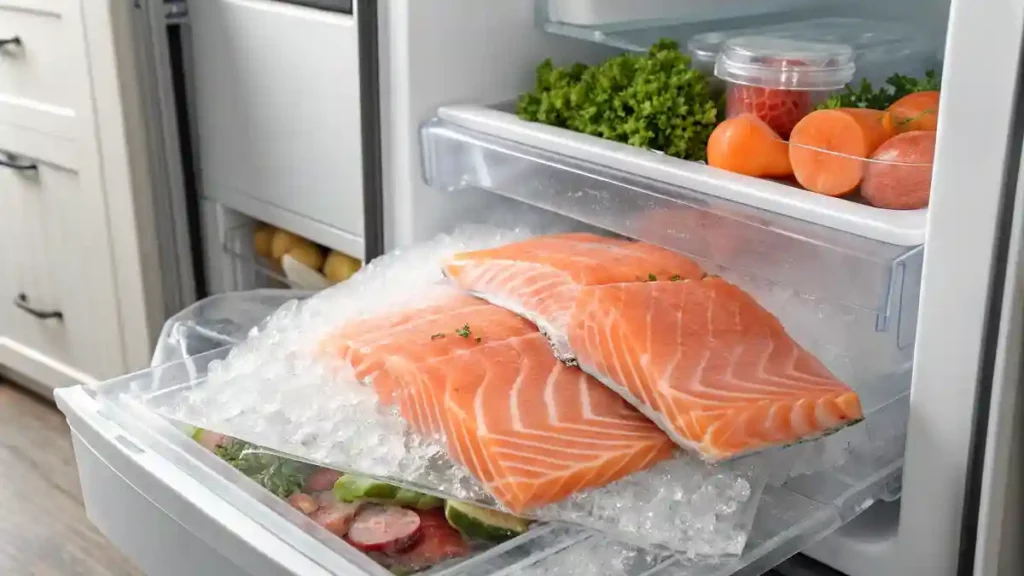
- Smoked Salmon: Yes, you can freeze smoked salmon slices! Wrap them tightly in parchment paper before placing them in a freezer bag. Use within one month for best results.
- Seasoned Fillets: Add lemon slices, dill, or garlic powder before wrapping to infuse subtle flavors during freezing.
- Portion Sizes: Cut fillets into single-serving portions for convenience when thawing and cooking.
Discover Free Daily Recipes and Kitchen Inspiration
Follow us on Pinterest for endless recipe ideas and kitchen hacks! Click here to visit our Pinterest page.
Storage and Reheating
How Long Can You Keep Fish Frozen?
Salmon can be stored in the freezer for up to three months without significant loss of quality. Beyond this period, the texture may degrade slightly, though it remains safe to eat if frozen at 0°F (-18°C).
Thawing Safely
For best results, thaw frozen salmon overnight in the refrigerator. Alternatively, submerge the sealed package in cold water for quicker thawing, changing the water every 30 minutes. Once thawed, cook immediately.
Reheating Cooked Salmon
To reheat cooked salmon, warm it gently in the oven at 275°F (135°C) or steam it to retain moisture. Avoid microwaving, as it can dry out the fish.
Tips and Additional Ideas (Freeze Salmon)
- Vacuum Sealing: Invest in a vacuum sealer for extended freezer storage and better preservation of taste and texture.
- Quick Freezing: Lay salmon flat on a baking sheet lined with parchment paper and freeze until solid before transferring to bags. This prevents sticking.
- Check for Ice Crystals: Avoid consuming salmon with excessive ice crystals, as this indicates freezer burn.
Nutrition Facts (Per 3.5 oz Serving of Raw Salmon)
- Calories: 206
- Protein: 22g
- Fat: 13g
- Saturated Fat: 3g
- Unsaturated Fat: 8g
- Trans Fat: 0g
- Carbohydrates: 0g
- Fiber: 0g
- Sugar: 0g
- Sodium: 59mg
- Cholesterol: 55mg
Frequently Asked Questions (FAQs)(Freeze Salmon)
Can I Freeze Uncooked Salmon?
Yes, uncooked salmon freezes exceptionally well. Properly wrapped and stored, it retains its freshness for up to three months.
Why Is Salmon Not Suitable for Freezing?
While most types of salmon are suitable for freezing, improper storage methods can lead to freezer burn or compromised texture. Always wrap tightly and remove excess air.
Does Salmon Taste Different After Freezing?
When frozen correctly, salmon maintains its flavor and texture. However, prolonged freezing may cause slight changes in texture due to ice crystal formation.
Can Salmon Be Frozen and Reheated?
Absolutely! Simply thaw frozen salmon safely, cook it thoroughly, and reheat gently using low heat methods like steaming or baking.
Can You Freeze Smoked Salmon Slices?
Yes, smoked salmon can be frozen. Wrap slices individually in parchment paper and store them in a freezer-safe bag. Consume within one month for peak quality.
What Are the Best Ways to Thaw Frozen Salmon?
The safest methods include thawing in the refrigerator overnight or submerging the sealed package in cold water. Avoid room-temperature thawing to prevent bacterial growth.
How Long Is Cooked Salmon Good For?
Cooked salmon should be consumed within three to four days when refrigerated. Always store it in an airtight container.
Should I Freeze Salmon With Skin On?
Leaving the skin on helps protect the flesh during freezing and thawing. Remove the skin before cooking if preferred.
Can I Cook Salmon Directly From Frozen?
Yes, many recipes allow you to cook salmon straight from the freezer. Adjust cooking times accordingly and ensure the internal temperature reaches 145°F (63°C).
Does Freezing Affect Omega-3 Content in Salmon?
No, freezing does not significantly impact the omega-3 fatty acid content in salmon, making it a nutritious option even after freezing.
Hungry for more? Follow us on Facebook for fresh, free recipes every single day! Visit our Facebook page.
Final Encouragement
Freezing salmon is a simple yet invaluable skill that ensures you always have access to this delicious and healthy protein source. Try these tips today and share your experiences with us in the comments below!












ANNONCE
[…] Do not reheat—always prepare with freshly warmed water to preserve nutrients. […]